
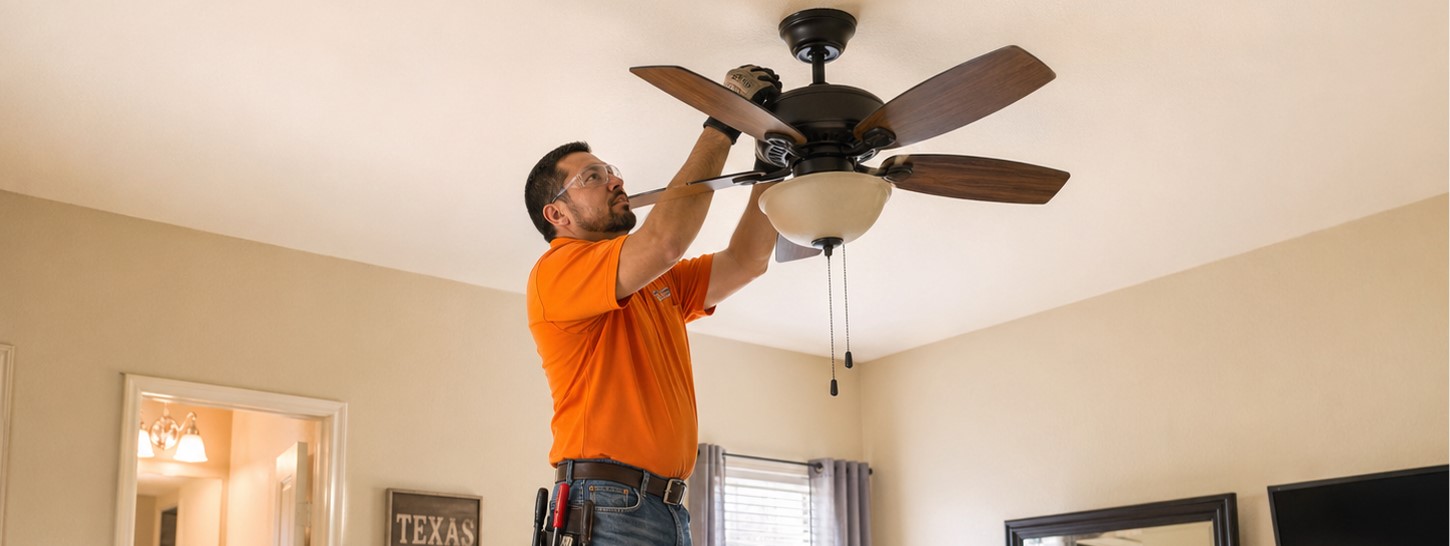
Ceiling Fan Installation,
Guaranteed.
New installs, swap-outs, brace upgrades, remote receivers — installed safely and correctly from electrical verification to final balance test. Flat-rate pricing, 1-year written warranty.
Ceiling Fan Installation Across 34 DFW Communities
In DFW’s climate, a ceiling fan is one of the most cost-effective comfort upgrades in any room. Running a fan on high in summer lets you raise the thermostat by up to 4°F without a perceptible difference in comfort — and reversing the direction in winter pushes warm air pooled at the ceiling back down into the living space. Done correctly, installation is straightforward. Done incorrectly — with an undersized fan, a non-rated ceiling box, or a circuit that can’t handle the load — the result is wobble, noise, tripped breakers, or worse.
What We Install & Service
- ✓ New ceiling fan installation — first-time installs in rooms without an existing fan
- ✓ Ceiling fan replacement — swap out old or failed fans for new models
- ✓ Fan-rated ceiling box upgrade — replace a standard light box with a fan-rated brace box
- ✓ Remote receiver installation — add wireless remote or smart control to an existing fan
- ✓ Outdoor ceiling fan installation — damp or wet-rated fans for covered patios and porches
- ✓ Light fixture to fan conversion — upgrade an existing ceiling light location to support a fan
Choosing the Right Fan for Your Space
Fan selection directly affects both performance and how the installation goes. The four variables that matter most:
- Location — indoor, damp-rated (covered porch), or wet-rated (exposed outdoor). Using an indoor fan outdoors voids the warranty and creates a safety hazard.
- Ceiling height — ceilings at 8 ft need a flush-mount or low-profile fan. Ceilings above 9 ft use a downrod to bring the blades to the right height (7–9 ft from the floor).
- Blade span — rooms up to 75 sq ft: 29–36 in; up to 144 sq ft: 36–42 in; up to 225 sq ft: 44 in; larger rooms: 52 in or more.
- Features — integrated light kit, remote control, Wi-Fi or smart home compatibility. We verify your wiring supports the control system before installation.
Not sure which fan fits your room? We help you confirm the right specs before ordering — saving you a return trip if the fan turns out to be the wrong size or rating.
Standard light boxes are not fan-rated — this matters.
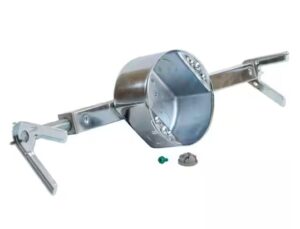
A standard ceiling box is designed to hold the static weight of a light fixture. A ceiling fan adds dynamic load — constant rotation and vibration. Installing a fan on a non-rated box is a code violation and a real safety risk. In most homes, an expandable brace can be installed through the existing ceiling hole without cutting drywall, upgrading the box to fan-rated in about 20 minutes.
Our 6-Step Ceiling Fan Installation Process
A ceiling fan installation that wobbles, trips breakers, or makes noise within the first year is almost always the result of skipping one of the steps below. We follow every step, every time.
- Select the right fan — location rating, ceiling height, blade span, and features are confirmed before the fan is purchased or brought to the job. A fan that is the wrong size or rating for the location is the most common cause of installation problems.
-
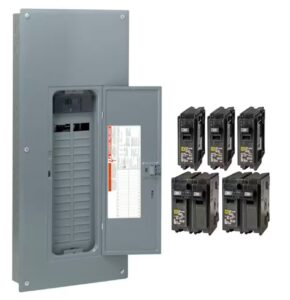
Verify electrical capacity — We check your choice of ceiling fan and wiring to ensure that it can be safely installed
-
Verify structural capacity — we confirm the ceiling box is fan-rated. If it is not, we upgrade it with an expandable brace before proceeding. No exceptions.
- Assemble the fan correctly — blade brackets, blade arms, light kit, and canopy are assembled per the manufacturer’s instructions before mounting. Assembly errors are the second most common cause of wobble.
-
Mount, wire, and test — the fan is secured to the rated box, wired to specification, and tested at all speeds and directions. The light kit and remote or wall control are verified before we touch the floor.
- Balance and clean up — blades are checked for balance and adjusted if needed. All packaging, wire clippings, and debris are removed before we leave.
Summer vs. Winter Fan Direction
Summer (counterclockwise): blades push air straight down, creating a wind-chill effect that makes the room feel cooler. Run on medium or high.
Winter (clockwise): blades pull air up and push the warm air that collects near the ceiling back down along the walls. Run on low to avoid a draft.
Most fans have a small direction switch on the motor housing, or the direction can be changed via remote on newer models. We show you where it is before we leave.
Also Installing a Light Fixture?
If you are also replacing a light fixture in another room, see our Light Fixture Installation page. We can often combine both in a single visit.
Ceiling Fan Installation: Your Questions Answered
What does ceiling fan installation actually involve?
More than most homeowners expect. A proper install covers fan selection, electrical capacity verification, structural verification of the ceiling box, correct assembly, mounting and wiring, full function testing, and blade balance. Skipping the electrical and structural checks — which happens with many quick installs — leads to wobble, noise, or safety issues within the first year.
How do I choose the right fan for my room?
The four key factors are location rating (indoor, damp, or wet), ceiling height (flush-mount for 8 ft ceilings; downrod for higher), blade span (matched to room square footage), and features (light kit, remote, smart control). We help you confirm the right fan before you purchase — getting this wrong and having to exchange the unit adds time and cost to the project.
How much does ceiling fan installation cost in DFW?
Cost depends on whether the existing ceiling box is already fan-rated, whether the wiring supports the desired control method, and whether it is a swap-out or a new-location install. Straightforward replacements where wiring and a fan-rated box are already in place are the most affordable. We provide flat-rate pricing before work begins.
For pricing on your specific situation, request a service estimate or call 817-944-4990.
My ceiling fan wobbles — can it be fixed without replacing it?
In most cases, yes. Wobble is usually caused by unbalanced blades, loose blade brackets, a canopy that is not seated flush, or a ceiling box that has worked loose. We diagnose the specific cause and correct it. If the fan motor itself is worn or damaged beyond a reasonable fix, we will tell you honestly rather than applying a temporary patch.
Can you install a ceiling fan where there is only a light fixture?
Yes, in most cases. The existing standard light box must be replaced with a fan-rated box first — it is not safe or code-compliant to hang a fan from a standard box. In most homes this can be done using an expandable brace installed through the existing hole without cutting the ceiling. We assess the situation and walk you through what is involved before starting.
Can ceiling fans be installed outdoors?
Yes, but the fan must be rated for the environment. A damp-rated fan is appropriate for covered porches and patios where the fan is sheltered from direct rain. A wet-rated fan is required for locations exposed to direct moisture. Using an indoor fan outdoors voids the manufacturer warranty and creates an electrical hazard. We confirm the correct rating for your specific location before installation.
How long does ceiling fan installation take?
A straightforward swap-out where a fan-rated box and correct wiring are already in place typically takes one to two hours per fan. New-location installs or box upgrades add time depending on what is involved. If you have multiple fans to install, batching them in a single visit is more efficient for both scheduling and cost.
The ServiceBeaver Ceiling Fan Installation Standard
Every ceiling fan we install is held to the same standard. No shortcuts, no exceptions.
Electrical & Structural Verified First
We confirm the circuit capacity and the ceiling box rating before touching the fan. No installation proceeds on a non-rated box.
Correct Fan for the Location
Indoor, damp, or wet-rated — blade span matched to room size — downrod length set for ceiling height. We help you get this right before you purchase.
Flat-Rate Pricing
You know the cost before we start. No hourly billing, no surprises when the invoice arrives.
Fully Documented
Before-and-after photos and electronic job records for every installation. Your home’s maintenance history, documented and accessible.
1-Year Written Warranty
Every ceiling fan installation is backed by a full one-year written warranty on our labor. If something is not right, we return and make it right.
Clean Worksite
All packaging, wire clippings, and installation debris are removed before we leave. Your home is clean when we finish.
Ceiling Fan Installation Across the DFW Metroplex
ServiceBeaver provides professional ceiling fan installation and replacement to homeowners across the Dallas–Fort Worth–Arlington metroplex. Whether you are in Keller, Southlake, Fort Worth, or any of our 34 service communities, we are ready to help.
Same flat-rate pricing. Same 1-year written warranty. Same standard of quality — wherever you are in DFW.
Communities We Serve
- Keller
- Southlake
- Westlake
- Northlake
- Colleyville
- Coppell
- Watauga
- Irving
- Trophy Club
- Roanoke
- Argyle
- Lewisville
- The Colony
- Grapevine
- Arlington
- Dallas
- Plano
- Denton
- Fort Worth
- Haslet
- North Richland Hills
- Richland Hills
- Haltom City
- Flower Mound
- Bedford
- Hurst
- Carrollton
- Las Colinas
- Corinth
- Garland
- Frisco
- McKinney
- Grand Prairie
- Saginaw
Request a Ceiling Fan Installation
Tell us about your project. We’ll confirm your appointment promptly.
Installing multiple fans? We’re happy to tackle them all in one visit.
Ready to get your ceiling fan installed right? Call 817-944-4990 or request service online.
Request Service