
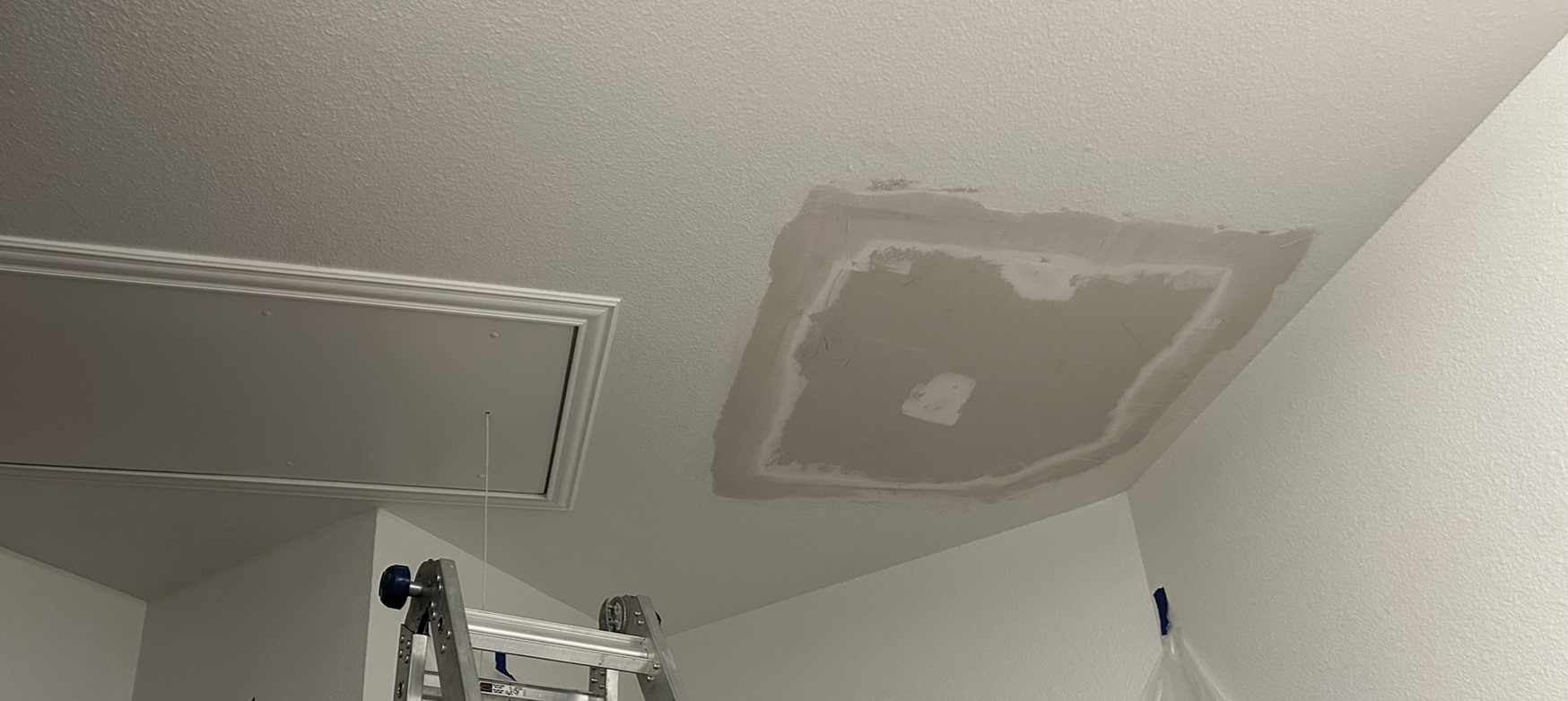
Water Damage Drywall Repair
in Grapevine, TX
Serving Grapevine homeowners across a city where historic character and newer construction create a wide range of water damage scenarios. Water damage rarely stops at the drywall — we assess every layer and restore it all with the discipline and craftsmanship your home deserves.
Where it starts
Common Causes of Drywall Water Damage in Grapevine
Water finds its way into walls and ceilings through many paths — some sudden, some slow and silent. Knowing the source matters before any repair begins.
Grapevine’s housing stock spans a uniquely wide range — from mid-century homes near the historic district to newer construction around Lake Grapevine and beyond. Older homes often feature original plumbing, thinner drywall, and rooflines that have seen decades of North Texas weather. Newer homes bring their own risks: complex rooflines, large window systems, and high HVAC demand during extreme summers. Whatever the construction era, water damage in Grapevine requires an assessment that goes past the surface — and that is the only kind we perform.
Roof Leaks
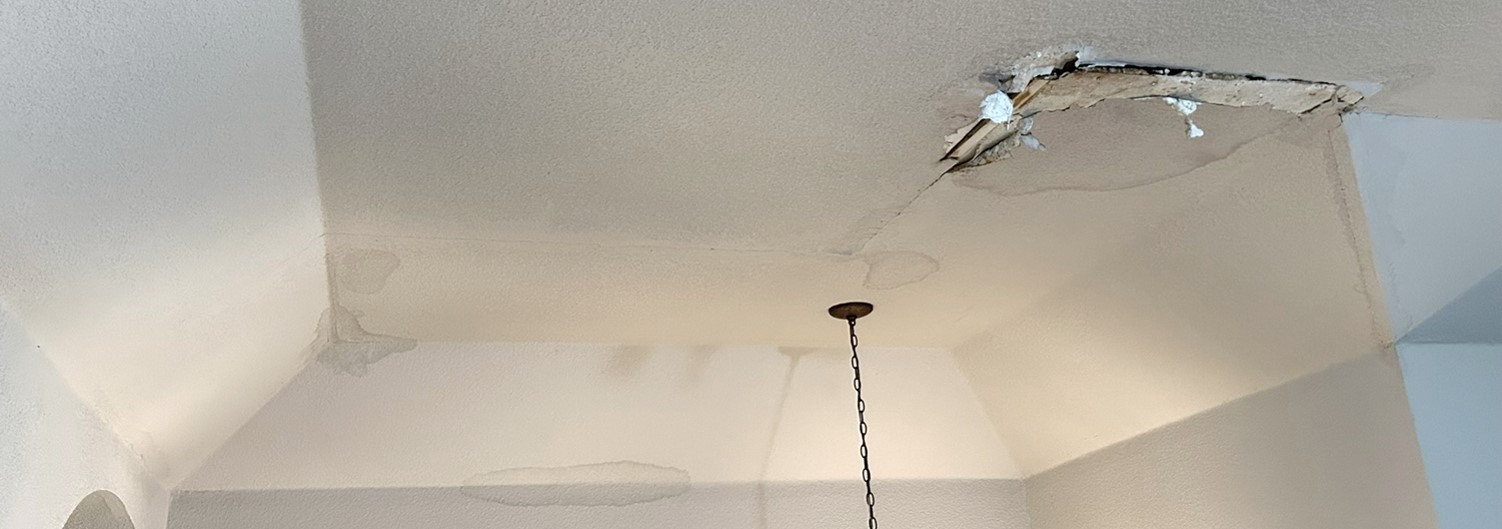
Missing shingles, failing flashing, or clogged gutters allow water to penetrate the roof deck and travel down into walls and ceilings — often far from where the leak originates.
Burst or Leaking Pipes
A slow pinhole leak inside a wall can saturate drywall and framing for weeks before any visible sign appears. Burst pipes produce immediate and significant flooding.
HVAC Condensation
Improperly insulated ducts, clogged drain pans, or poorly sealed air handlers create condensation that drips onto ceiling drywall and accumulates inside wall cavities. HVAC maintenance is one of the most effective ways to prevent this category of damage.
Appliance Failures
Dishwashers, refrigerators, washing machines, and water heaters can leak or overflow — silently saturating the floor, subfloor, and adjacent walls over time.
Bathroom Moisture & Overflow
Tub and shower overflows, failing caulk seals around fixtures, or exhaust fans that vent improperly allow persistent moisture to penetrate walls behind tile and around plumbing.
Foundation & Exterior Intrusion
Water migrating through foundation cracks, window seals, or exterior cladding can travel behind finished walls — causing damage that appears unrelated to the entry point.
The full picture
What Gets Damaged Beyond the Drywall
Drywall is what you see. But water doesn’t stop there. By the time damage is visible on the surface, several other materials have typically already been compromised.
-
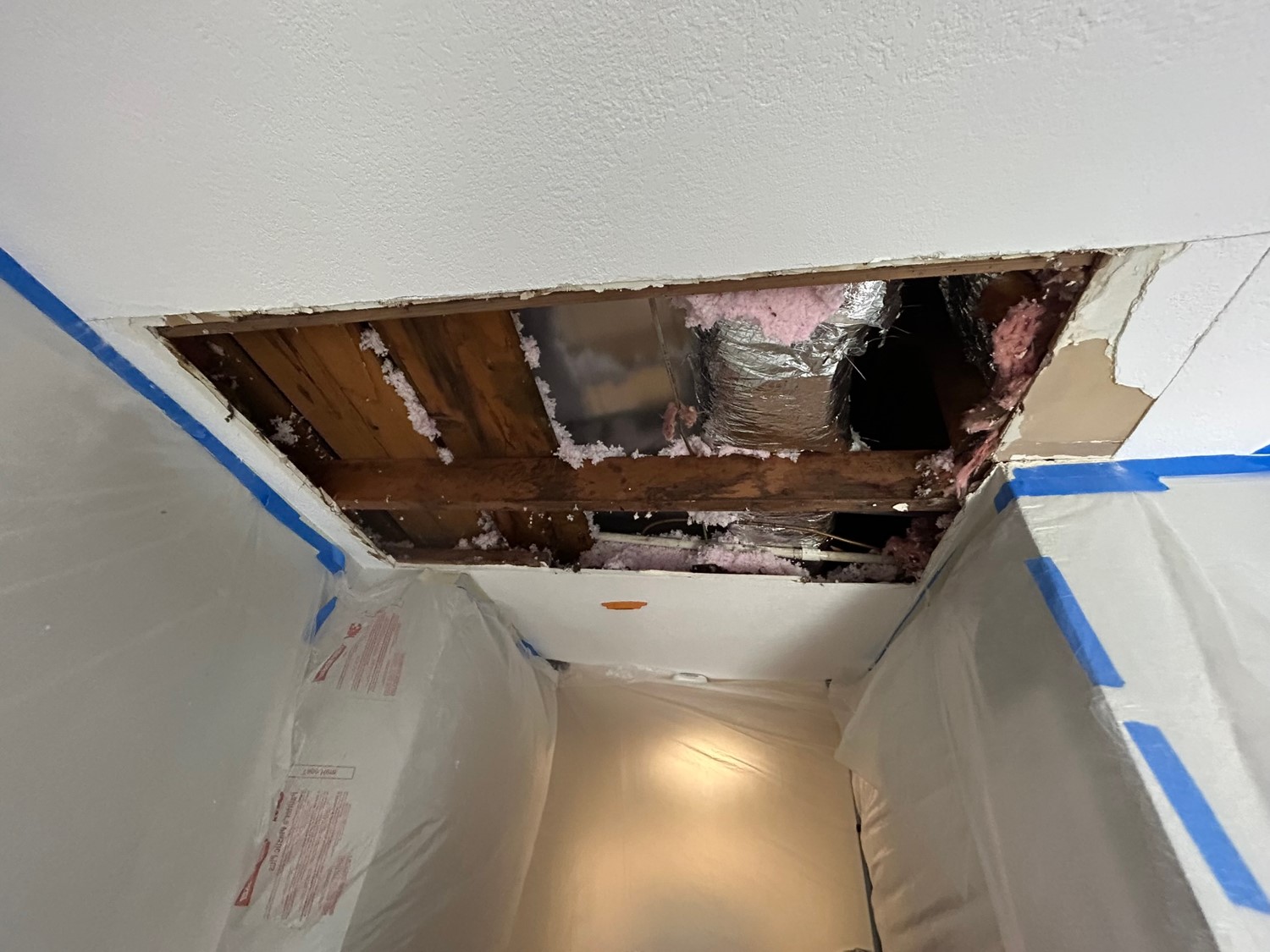
InsulationBatt and blown-in insulation absorbs water readily, loses its thermal value, and becomes a long-term moisture reservoir that promotes mold growth.
-
Wood Framing & StudsProlonged moisture causes wood framing to swell, warp, and eventually rot — compromising the structural integrity of the wall itself.
-
Electrical ComponentsOutlets, wiring, junction boxes, and switch plates inside wet walls are a serious safety concern. Water and electricity require immediate attention.
-
Crown Molding & Ceiling TrimWater that runs along ceiling surfaces swells and separates trim joints, causes paint to bubble, and warps the molding profile permanently.
-
Baseboards & Wall TrimBaseboards absorb water at floor level and swell, separate from walls, and develop mold behind them — often requiring full replacement.
-
Vapor & Water BarriersPlastic sheeting and moisture barriers installed inside wall cavities are often torn or bypassed during leak events, removing a critical layer of protection.
-
Subfloor & FlooringWater migrating downward saturates subfloor panels, causes hardwood to cup and buckle, and compromises tile adhesion and grout lines.
-
Paint & Surface FinishesEven after drying, water-stained paint reappears through new coats unless the surface is properly primed with stain-blocking primer first.
Why most repairs fall short
A common shortcut is to cover the visible drywall surface, paint over it, and call it done. The problem: hidden moisture in insulation and framing continues to cause damage, stains bleed back through paint within weeks, and mold develops out of sight.
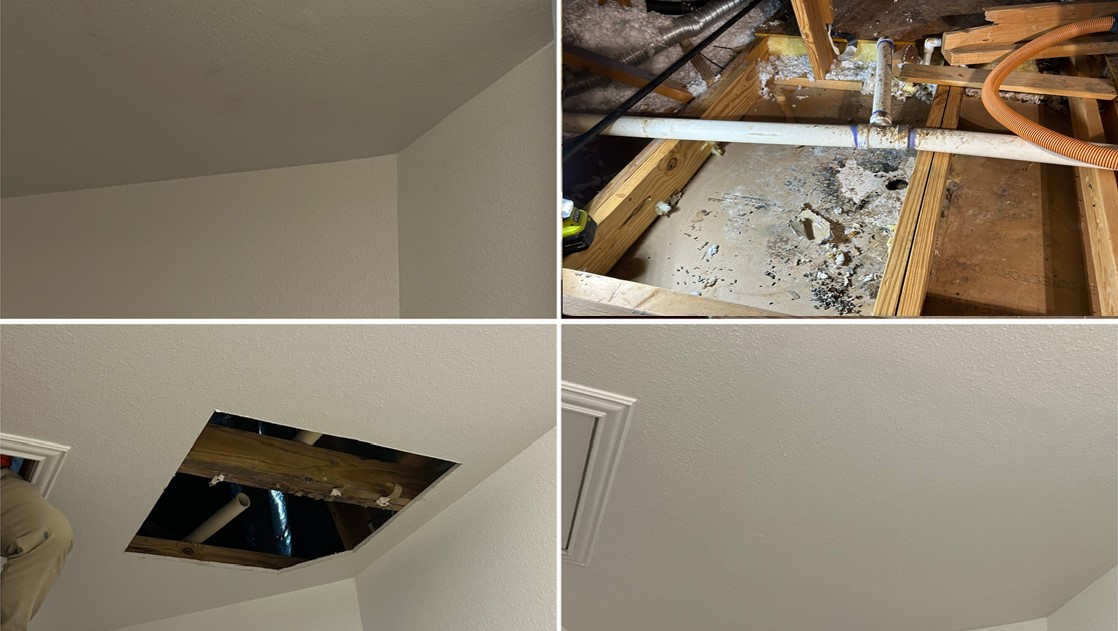
A proper repair starts with understanding the full extent of damage — not just what is visible on the surface. This requires opening the wall, inspecting every layer, and making a deliberate decision about what must be replaced versus what can be dried and retained.
This takes more time. It costs more. And it is the only way to repair water damage correctly.
- Water stain or discoloration on wall
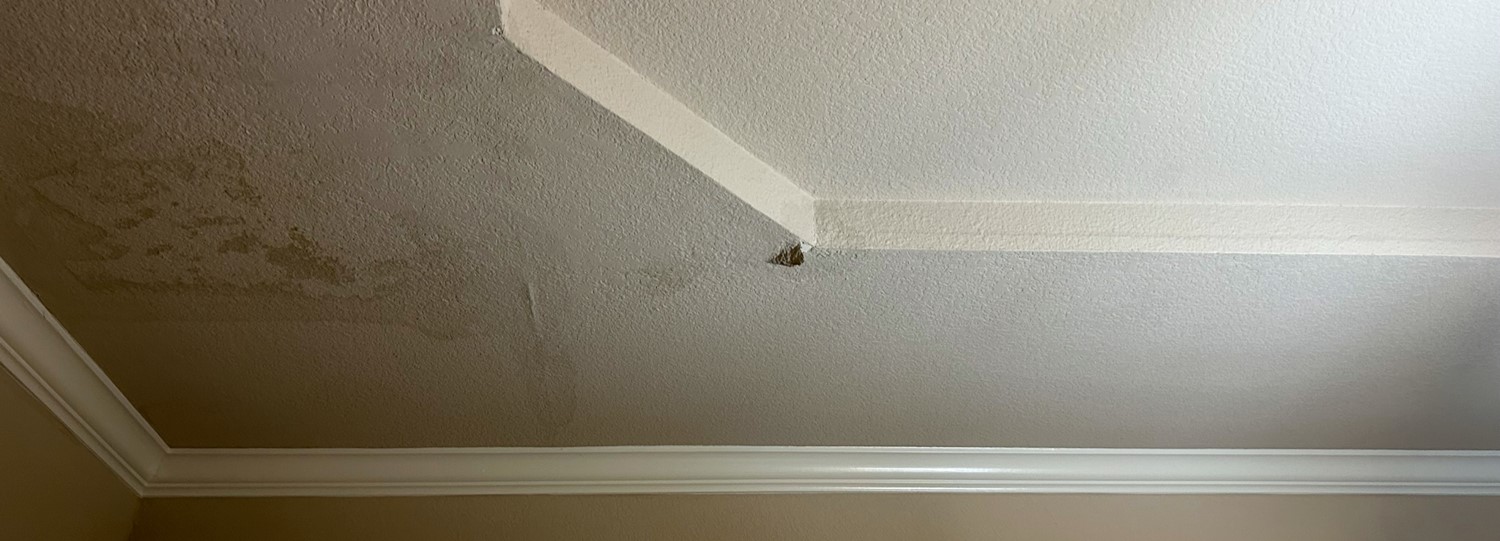
- Bubbling or peeling paint
- Soft or sagging drywall
- Warped baseboard or trim
- Saturated insulation losing R-value
- Swollen or rotting framing
- Compromised electrical wiring
- Damaged vapor or water barriers
- Mold beginning to develop
- Subfloor saturation below
The full scope
Water Damage Is an Iceberg Problem
What you see on the surface of a wall or ceiling is rarely the complete picture. Water travels — it follows gravity, it wicks through porous materials, and it accumulates wherever air movement is lowest.
By the time a stain appears on your drywall, the water has usually already passed through the finish layer, saturated the drywall core, entered the cavity behind it, and absorbed into whatever insulation or framing it found there.
This is why a serious water damage repair is priced differently from a simple surface fix. The drywall is the last thing we address — not the first.
What sets us apart
Professional Training. Proprietary Methods. Verifiable Credentials.
Our approach is grounded in continuous field training, professional certifications and licenses, and two proprietary protocols we developed specifically for drywall water damage repairs — methods that place us in a best-in-class category among professional drywall repair companies in the DFW area.
4-StepAssessment Protocol
Through years of field experience and training, we have learned to identify damage that is not readily visible — and to incorporate those findings into our estimates. The result is better, more lasting solutions and a significantly reduced likelihood of unexpected cost adjustments. Our 4-Step assessment is the foundation of our 7-Step repair process.
7-StepRepair Process
Our repair process goes beyond what is visible — it addresses scope that is not obvious to the homeowner and is often overlooked entirely. We call this level of discipline “the quality you can’t see.” Repairing drywall is not complicated; restoring water damage correctly, with minimal disruption to your home, is something few contractors make a priority.
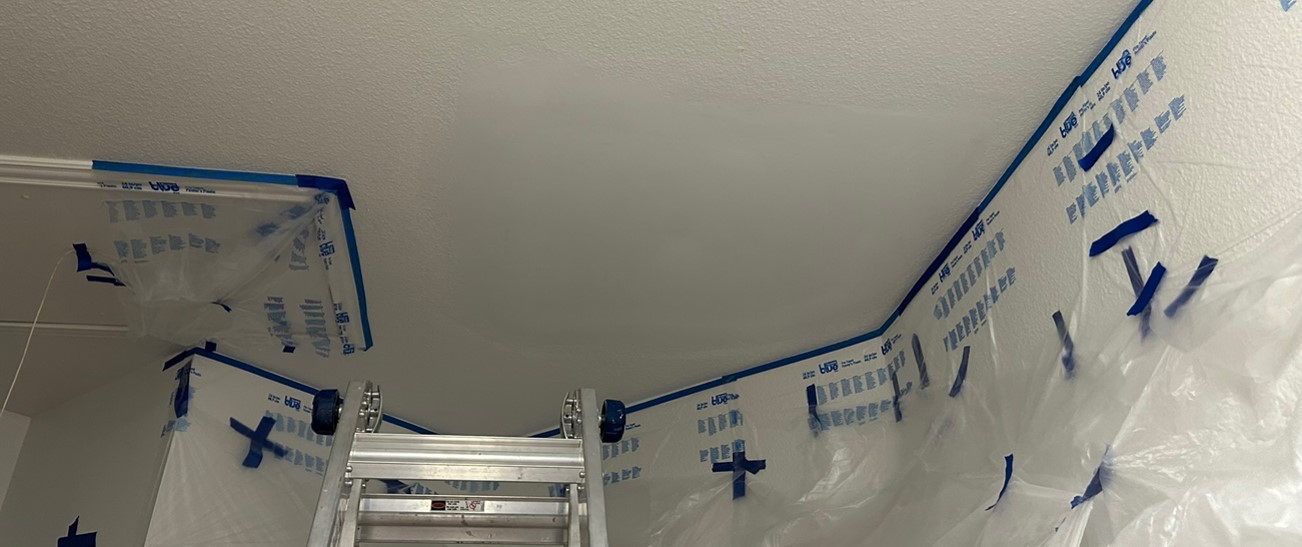
Given the right conditions, mold and organic growth can develop within hours of a water damage event — and gradual leaks are almost always accompanied by some form of it. During assessment and repair, even a slight disturbance of active mold can release millions of spores into the air, which your HVAC system can carry throughout your home. This is why our 7-Step repair process includes specific preventive containment measures to protect your home during every stage of the repair.
Professional Licenses and Certifications
We are IICRC (US) Certified and TDLR (Texas) Licensed
Each license represents a distinct domain of expertise, tested and issued by the state of Texas and a national professional body. Together with our more than 60 years of combined field experience, they form the foundation of our proprietary methods.
Water Damage Restoration
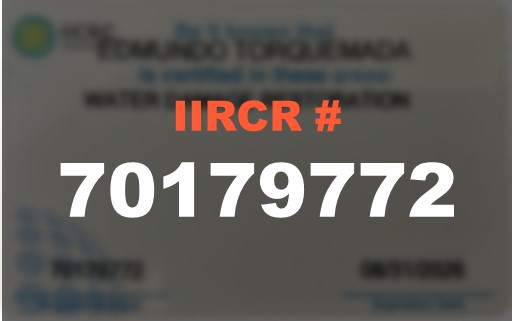
Institute of Inspection Cleaning and Restoration Certification — National StandardThe recognized national standard for water damage restoration professionals. IICRC certification defines how water damage is assessed, how drying is validated, and how materials are specified for restoration. Our proprietary assessment protocol is built on this framework.
Mold Remediation Contractor
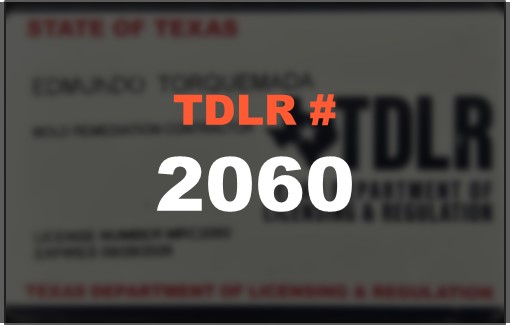
Texas Department of Licensing and Regulation — Mold Remediation Contractor LicenseTexas state licensing for mold assessment and remediation. This credential qualifies us to identify mold risk during water damage assessment — a critical evaluation that general handymen and most drywall contractors are not licensed to perform. We know what we are looking for, and we know when to escalate.
HVAC-R Licensed Contractor
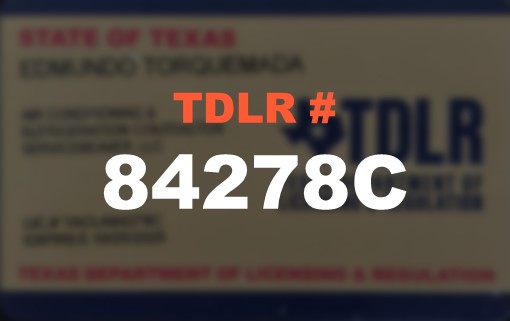
Texas Department of Licensing and Regulation — Full HVAC-R Contractor LicenseFull Texas HVAC-R contractor license. Directly relevant in water damage events caused by HVAC condensation, drain pan failures, improperly insulated ductwork, or air handler leaks — allowing us to assess and address the source of the damage, not only the damage it caused to your walls and ceilings.
Bringing everything together
From A to Z Our Drywall Repairs Are Built To Last
Water damage is a stressful experience for any homeowner. At ServiceBeaver, we believe that restoring your home to its original condition deserves genuine attention to detail — after all, it is your home, your castle, and it deserves the care and craftsmanship our team delivers.
And The Finishing Touch
Localized or Full-Space Painting
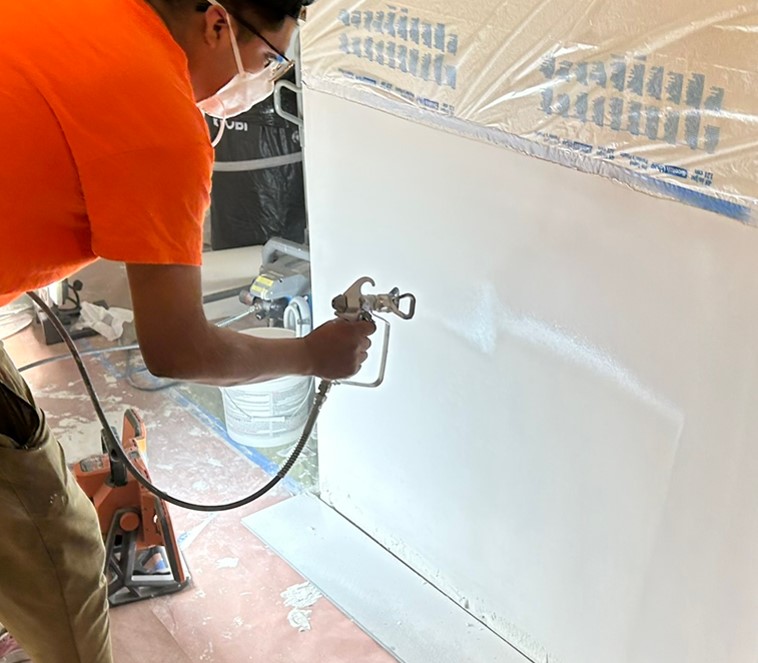
We treat paint as a critical part of the repair, not an afterthought. This means primer selection, sheen matching, and knowing when to paint a single repaired section versus an entire wall.
- Stain-blocking primer on all water-affected surfaces — no exceptions
- Primer must fully cure before paint is applied
- Paint sheen matched to existing finish (flat, eggshell, satin, semi-gloss)
- Color matched to existing wall — we work with your existing paint or provide matching
- Full wall painted when repair edges would show in sheen or color
- Trim and baseboard painted or touched up to match
Included in Every Project
Absolute Cleanup & Written Warranty
The repair is not complete until your home looks exactly as it did before we arrived — minus the damage.
Complete Cleanup & Debris Removal
All removed materials — drywall, insulation, trim, joint compound dust — are bagged, removed from your home, and disposed of properly. We vacuum, wipe down surfaces, and leave the work area in better condition than we found it.
- All debris bagged and removed from property
- Dust vacuumed from floors, surfaces, and ledges
- Protective coverings removed and packed out
- Final walkthrough with homeowner before we leave
One-Year Written Warranty
Every water damage repair we perform is backed by a full one-year written warranty on all labor and materials we supply. If the repair fails, cracks, stains reappear, or anything we touched does not perform correctly, we return and correct it at no charge.
- 12-month coverage on all labor
- Covers materials supplied by ServiceBeaver
- No-cost return visit if anything fails
- Warranty provided in writing at job completion
What customers say
Real Reviews from DFW Homeowners
Verified reviews from Google.
Very good company with quality work and great communication from their workers. I had some leaks from hail damage that damaged my ceiling. They repaired it fast and did an awesome job. They prepped the area very well to minimize any mess. I will definitely be using them again in the future for some tile work.
✓ Verified Google ReviewWhen the technician arrived, he spent time to thoroughly review the steps that he would take to complete the repair, how much time I should expect it to take, and verified the price that I was quoted for the job. He did an incredible job of matching the texture of our wall and keeping the work area clean. He wore protective covers on his shoes and offered to mask up while he was in the house. I appreciate his professionalism and quality of the work.
✓ Verified Google ReviewWe have recently completed a number of projects using ServiceBeaver. These guys are the real deal! They provide estimates and will keep you informed every step of the way of their progress. The team are courteous, arrive on time, perform the work, leave the job site spotless and the customer 100% satisfied! Without a doubt the best household repair specialists we have ever used and we can recommend them without reservation.
✓ Verified Angi ReviewCommon questions
Frequently Asked Questions
Answers to the questions homeowners ask most before scheduling a water damage assessment.
How do I know if my drywall has water damage?
Common signs include brown or yellow staining on walls or ceilings, paint that is bubbling or peeling, drywall that feels soft or spongy to the touch, visible mold growth, musty odor, or trim that has separated from the wall. A stain that has dried does not mean the damage is resolved — moisture can remain in the insulation and framing behind the drywall long after the surface appears dry and even foster organic growth including mold.
Does water-damaged drywall always need to be replaced?
Not always, but in most cases yes. Drywall that has been saturated loses its structural integrity and becomes a moisture reservoir that promotes mold. Drywall exposed to only light, brief moisture — and dried thoroughly within 24–48 hours — may be salvageable. Our 4-Step assessment determines precisely what must be replaced versus what can be retained. We never recommend replacement beyond what is genuinely necessary.
Do you repair just the drywall, or also what is behind it?
We repair the full scope of damage — not just the surface. A proper water damage repair includes removing saturated insulation, inspecting and addressing wood framing, checking electrical components inside the wall cavity, and replacing vapor barriers if compromised. Covering damaged drywall over wet insulation or damaged framing is not a repair — it is a delay.
How long does water damage drywall repair take?
Scope varies significantly by project. A localized ceiling repair from a small roof leak may be completed in one to two days. A larger event — burst pipe, multi-wall saturation — can take three to five days depending on materials involved and drying time between coats of joint compound and primer. We provide a timeline estimate as part of our assessment before any work begins.
Will my homeowner's insurance cover this repair?
It depends on the policy-specific coverage, but in many cases, sudden and accidental water damage — such as a burst pipe or appliance failure — is covered by standard homeowner's policies. Gradual leaks and maintenance-related damage are typically excluded. We provide detailed written documentation of scope and materials that can be submitted directly to your insurer.
What licenses should a water damage contractor have in Texas?
Texas does not require a general contractor license for drywall repair. However, the specific work involved in a thorough water damage repair is governed by additional licensing: mold assessment and remediation requires a TDLR Mold Remediation Contractor license; HVAC-related leak sources fall under TDLR HVAC-R licensing; and the national IICRC standard defines professional water damage restoration practices. ServiceBeaver holds all three: IICRC 70179772, TDLR MRC2060, and TDLR TACLA 84278C.
Do you paint after the repair?
Yes — unless otherwise agreed with the customer we generally include paint as part of our standard water damage repair. This includes stain-blocking primer on all water-affected surfaces, a cure period before the top coat is applied, and color and sheen matching to the existing wall finish. When a localized repair would show visible edges due to sheen or color variation, we offer the option to paint the full wall rather than just the repaired section.
How do you prevent mold after water damage?
Mold prevention starts with proper drying before any new material is installed. We do not close walls until moisture readings confirm the cavity is within acceptable limits. We remove all saturated insulation, which is one of the primary mold reservoirs after water events. Where mold risk is identified, our TDLR Mold Remediation Contractor license (MRC2060) qualifies us to assess and address it — a capability most drywall contractors do not have.
What does your one-year warranty cover?
Our warranty covers all labor and materials we supply for 12 months from project completion. If any repair we performed fails — including stains reappearing, cracks forming, or paint not adhering correctly — we return and correct it at no charge. The warranty is provided in writing at job completion and clearly states what is covered and what is not.
Do you serve Grapevine, TX?
Yes — we serve all of Grapevine, including ZIP code 76051. Grapevine is within our core service area and we are familiar with both its older and newer neighborhoods. Call 817-944-4990 to schedule.
After water damage, how soon can mold or organic matter grow?
It depends, but in general organic growth can develop as fast as a few hours after the water damage event. Keep in mind that mold occurs naturally in almost every environment, and it only needs the proper conditions: water, temperature, and a source of food to develop. This said, if the damage occurred in the cold season any potential organic growth will be slower than in warmer temperatures.
How should I prepare my home for a water damage drywall repair?
Depending on the scope, you can expect the affected area to be contained for anywhere from a few hours to several days. Access to the work area will be very limited throughout the repair — so before we begin, we recommend removing any items you may need and relocating them to another area of your home.
How much does a typical water damage drywall repair cost?
Every water damage event is different, which makes it difficult to reference a typical repair cost. What we can say is that our pricing reflects the full-scope discipline of our 4-Step assessment and 7-Step repair process — not a cover-and-paint shortcut. Small, localized repairs typically start in the low hundreds of dollars; larger multi-wall or structural events can reach several thousand. Ceiling repairs, architectural features, and limited access to the damaged area all contribute to higher project costs.
After experiencing water damage, how do I know if I have mold?
Mold can develop in a matter of hours given the right conditions. Unless you act rapidly to remove all moisture present, chances are you will have some form of organic growth in the damaged area. Visible growth will manifest as an area of different color, usually dark, and often accompanied by a change in texture and a musty odor. Keep in mind that organic growth and mold can develop in inconspicuous areas — which is why it’s important to address water damage quickly and with a professional company.
Also serving nearby communities
Questions Before Our Visit?
We’re happy to walk you through what to expect, answer questions about the process, or discuss anything we’ve covered on this page. Call us directly or submit a message below.
Request Service or Ask a Question
Use the form below to request an assessment, ask a question before our visit, or provide additional details about the damage. We typically respond within one business day.